
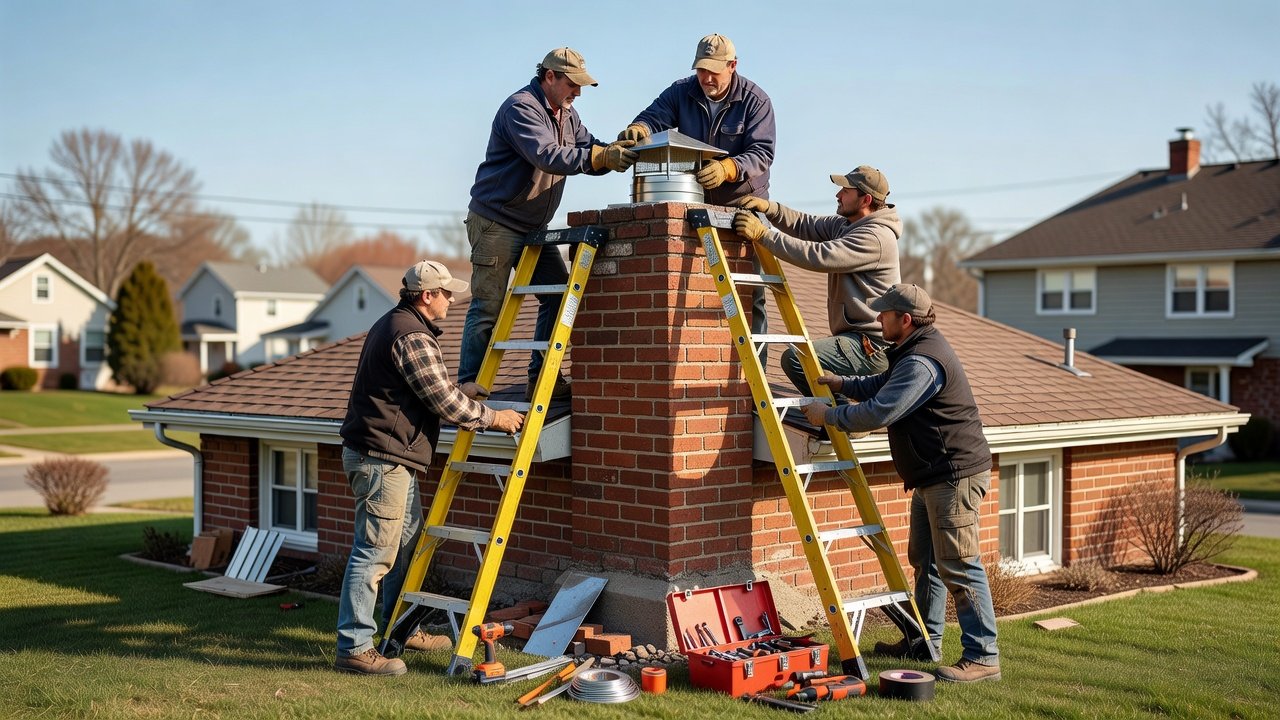
Smart Chimney Cap Installation Lawrence NY: 2026 Guide for Hewlett Residents
Roughly one in three uncapped chimneys on Long Island develops a moisture-related defect within five years and on the south shore of Nassau County, where salt air rolls in off the Atlantic and freeze-thaw cycles hammer masonry from November through March, that timeline shrinks. Chimney cap installation in Lawrence NY is one of the most cost-effective things a homeowner can do to protect a fireplace system, yet we pull rusted, missing, or undersized caps off chimneys in Hewlett, Woodmere, and Cedarhurst every single week. If your chimney is missing its cap or the existing one is failing, there are warning signs you can spot right now and a few that mean you should not wait until spring.
How a Hewlett Homeowner Found Out the Hard Way
Last February a homeowner on one of Hewlett’s older tree-lined streets called us after noticing a dark stain spreading across the ceiling above their fireplace. They assumed the roof was leaking. When our technicians got up on the roof, the cap was gone — literally gone, blown off during a nor’easter weeks earlier. Water had been funneling straight down the flue, soaking the smoke shelf, saturating the clay tile liner, and wicking into the surrounding masonry. By the time we did a full camera inspection, two flue tiles were cracked and the mortar crown had started to spall. What would have been a straightforward chimney cap installation turned into a cap plus crown repair job. The homeowner paid more than they needed to, simply because the early signs went unnoticed.
We tell that story not to alarm anyone but because it is a common pattern in this area. The signs were there weeks before the ceiling stain appeared.
Warning Signs Your Chimney Cap Needs Replacing Now
Water dripping into the firebox when it rains
This is the most direct signal. Open the damper and look up — if you can hear or feel drips during or after rain, the flue is open to the sky. Either the cap is gone or the mesh has corroded through. Call a pro now. Every rain event is sending water onto your smoke shelf and liner.
Rust stains on the firebox floor or damper plate
A thin orange or reddish-brown film on the cast-iron damper or on the floor of the firebox tells you moisture has been getting in long enough to oxidize the metal. The cap may still be present but failing — perhaps the mesh skirt has rusted away, leaving the crown unprotected on the sides. Schedule an inspection soon; this one is progressing but may not yet be structural.
Animal sounds or debris dropping into the fireplace
Scratching, chirping, or the sound of something moving in the flue almost always means the cap mesh is gone or was never there. Starlings, raccoons, and squirrels are common in Hewlett and Island Park, and they find uncapped flues irresistible. Nesting material is a serious fire hazard. According to the Chimney Safety Institute of America (CSIA), chimney fires account for approximately 25,000 house fires annually in the United States, causing over $125 million in property damage — and blocked or debris-filled flues are a leading contributing factor. Call a pro now.
Efflorescence — white chalky streaks on the chimney exterior
That white powder on the brick face is dissolved mineral salt being pushed outward by water moving through the masonry. It means moisture is entering from the top and migrating down. In coastal communities from Atlantic Beach to Long Beach, salt-laden air accelerates this process dramatically. Efflorescence itself is not the crisis — it is the symptom. Keep an eye on it if it is minor and the cap looks intact; call us if it is spreading or if the brick face is flaking.
A musty or earthy smell from the fireplace in humid weather
Creosote mixed with moisture produces a distinctive, unpleasant odor that gets worse on humid summer days or after rain. If your fireplace smells like a wet basement even when you have not used it in months, water is entering the flue and activating old creosote deposits. The CSIA notes that creosote a highly flammable byproduct of wood combustion accumulates in three stages, with third-degree glazed creosote requiring professional chemical treatment or flue replacement. A failing cap speeds that accumulation. Call a pro now — you need a sweep and an inspection alongside the cap replacement.
Visible daylight around the cap or a tilted, shifted cap
Get a pair of binoculars and look at the top of your chimney from the yard. A cap that has shifted, tilted, or separated from the crown lets wind-driven rain in from the sides even if the top plate looks intact. We see this constantly in North Woodmere and Woodsburgh after storm seasons. Call a pro now — a shifted cap will not re-seat itself.
Spalling or crumbling mortar at the chimney crown
The crown is the concrete or mortar slab that seals the top of the chimney stack. When a cap fails, the crown bears the full force of weather. Freeze-thaw cycling cracks it, water penetrates, and chunks of mortar begin to break away. If you can see spalling from the ground, the damage is already significant. Call a pro now — you likely need both a new cap and our chimney repair and repointing service.
Staining or deterioration on interior walls near the chimney chase
Paint bubbling, plaster discoloration, or damp patches on interior walls that share a surface with the chimney chase are signs that moisture has moved well past the firebox. At this stage a chimney cap installation alone will stop the source, but remediation of the surrounding material may also be needed. Call a pro now.
What Chimney Cap Installation Actually Costs in 2026
We want to give you honest numbers rather than a vague range that tells you nothing. For a standard single-flue chimney in Hewlett or Cedarhurst, a stainless-steel chimney cap installed by our team in 2026 typically runs between $200 and $375 all in — materials and labor. That price holds when the crown is in reasonable condition and access is straightforward.
What drives the price up:
- Multi-flue chimneys: a full-width cap covering two or three flues costs more in materials — expect $350 to $600 depending on size.
- Crown damage: if we arrive and find cracked or spalled crown mortar, we will need to repair it before capping. Crown repairs in this area run $200 to $500 depending on severity.
- Steep or complex rooflines: some of the older homes in Woodsburgh and Hewlett Harbor have steep pitches that require additional safety rigging and add time.
- Material upgrade: galvanized caps corrode faster in our coastal salt-air environment. We recommend stainless steel or copper for homes in Atlantic Beach or Lido Beach. Copper caps run higher — $400 to $700 installed — but they last decades.
HomeAdvisor and Angi report the national average chimney sweep cost at $150 to $350, and Level 1 inspection at $100 to $250. Our cap installations are separate from those services, though many homeowners combine them into a single visit to save on the trip charge. The National Fire Protection Association (NFPA 211) recommends that chimneys, fireplaces, and vents be inspected at least once per year — bundling a cap installation with your annual inspection is the most cost-efficient approach.
The one cost that does not belong in any conversation about chimney caps is the cost of skipping it. Water damage to a flue liner, smoke shelf, and surrounding masonry can run $2,000 to $8,000 in repairs. A cap is not a luxury item.
Talk to Our Team Before the Next Storm
If you recognized any of the signs above or if you simply cannot remember the last time anyone looked at your chimney cap reach out to us before the next stretch of heavy rain or coastal weather moves through. We serve Hewlett, Hewlett Harbor, Woodmere, Cedarhurst, Inwood, and the surrounding Nassau County communities, and we are happy to take a look and give you a clear, no-pressure estimate. Use the contact form on our website to get started we will get back to you promptly.
Frequently Asked Questions: Chimney Cap Installation in Hewlett and Nassau County
How do I know if my chimney cap is missing or just damaged?
From the ground with binoculars, you should be able to see a cap sitting level on top of the chimney stack. If you see only the open flue tile or a bare crown slab, the cap is gone. If you see something there but it looks tilted, rusted, or missing the mesh skirt, it is damaged. Either way, we recommend a close-up inspection — what looks minor from the yard can be significantly worse from the roof.
What type of chimney cap holds up best in a coastal area like Hewlett or Atlantic Beach?
Stainless steel is our standard recommendation for most homes in this area. It resists the salt air corrosion that eats through galvanized caps within a few years on south shore Long Island. For homeowners who want the longest possible service life and do not mind the higher upfront cost, copper is excellent it is effectively maintenance-free and looks handsome on period homes in Hewlett and Woodsburgh.
Can I install a chimney cap myself?
Physically, yes caps are not complicated hardware. Practically, we would caution against it. Getting the size right requires measuring the flue tile or the full crown opening precisely; an undersized cap can actually impede draft, and an oversized one may not seal properly against wind-driven rain. Working on a pitched roof without the right equipment is also a real safety risk. Given that professional installation in this area is a few hundred dollars, it is rarely worth the DIY attempt.
Will my homeowner’s insurance cover chimney cap replacement?
It depends on the cause. If a named storm blew the cap off, most standard homeowner policies will cover the replacement cost, minus the deductible, as a sudden accidental event. Damage from gradual deterioration or rust-out is almost always excluded. Document the condition of your chimney with dated photos annually — it strengthens any claim you may need to file.
How long does a chimney cap installation take?
For a single-flue chimney with a sound crown, the installation itself is usually completed in under an hour once our technicians are on the roof. If we are combining the visit with a chimney sweep or our chimney inspection service, plan for two to three hours total.
How often should a chimney cap be replaced?
A quality stainless-steel cap installed correctly should last fifteen to twenty years or more. Galvanized caps in this coastal environment may need attention in as few as five to seven years. We check cap condition during every annual inspection visit and will tell you honestly if it is showing early signs of wear — there is no reason to replace a cap that has years of life left in it.
Related from Lawrence Chimney: Smart Chimney Sweep Inwood NY · Smart Chimney Inspection Cedarhurst NY · Essential Fireplace Inspection Lawrence NY
Pingback: What Atlantic Beach Homeowners Should Know Before Booking a Chimney Sweep Atlantic Beach NY: 2026 Guide for Lawrence Residents – Lawrence Chimney