
Chimney Liner Installation in Lawrence, NY
Chimney liner installation is the process of placing a protective conduit ceramic, stainless steel, or cast-in-place inside your existing chimney flue so that combustion gases travel safely out of your home without ever touching the surrounding masonry. It matters because an unlined or cracked flue is the single most direct path for carbon monoxide and heat to migrate into living spaces, a risk the National Fire Protection Association (NFPA 211) has specifically addressed by requiring a sound liner in every residential chimney system.
Here in Lawrence a barrier-island community in Nassau County where salt air off Reynolds Channel quietly eats through mortar and clay tile year-round older flues deteriorate faster than homeowners expect. If your home was built before the 1950s, there is a real possibility it has a bare-brick flue with no liner at all.
When the Old Liner Stops Doing Its Job
Most Lawrence residents don’t think about their liner until something goes wrong: a Level 2 inspection reveals spalling tile, a new gas insert doesn’t draft correctly, or a home sale falls through because an inspector flags an unlined chimney. These aren’t edge cases. Clay-tile liners crack from thermal cycling firing the fireplace on a cold January night in Lawrence and then letting it cool and the salt-laden humidity we get off the South Shore accelerates the process considerably. A liner that looked acceptable five years ago can develop gaps wide enough to matter by the time you schedule your next sweep.
The fix isn’t cosmetic patching; it’s a properly sized, code-compliant liner matched to your exact heating appliance and flue height.
What We Actually Install (and Why We Choose Each Material)
Lawrence Chimney works with three liner types, and we’ll tell you plainly which one fits your situation:
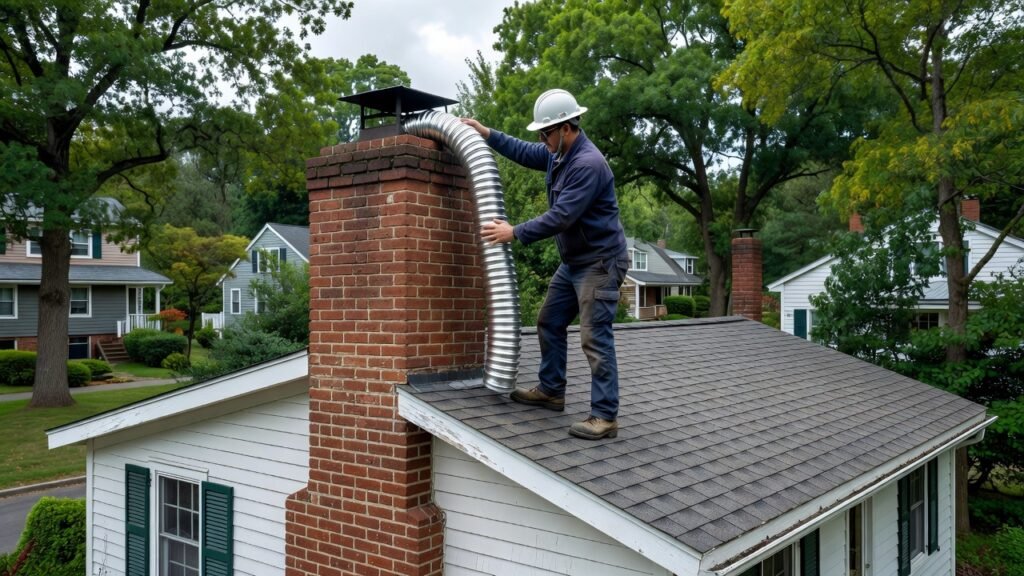
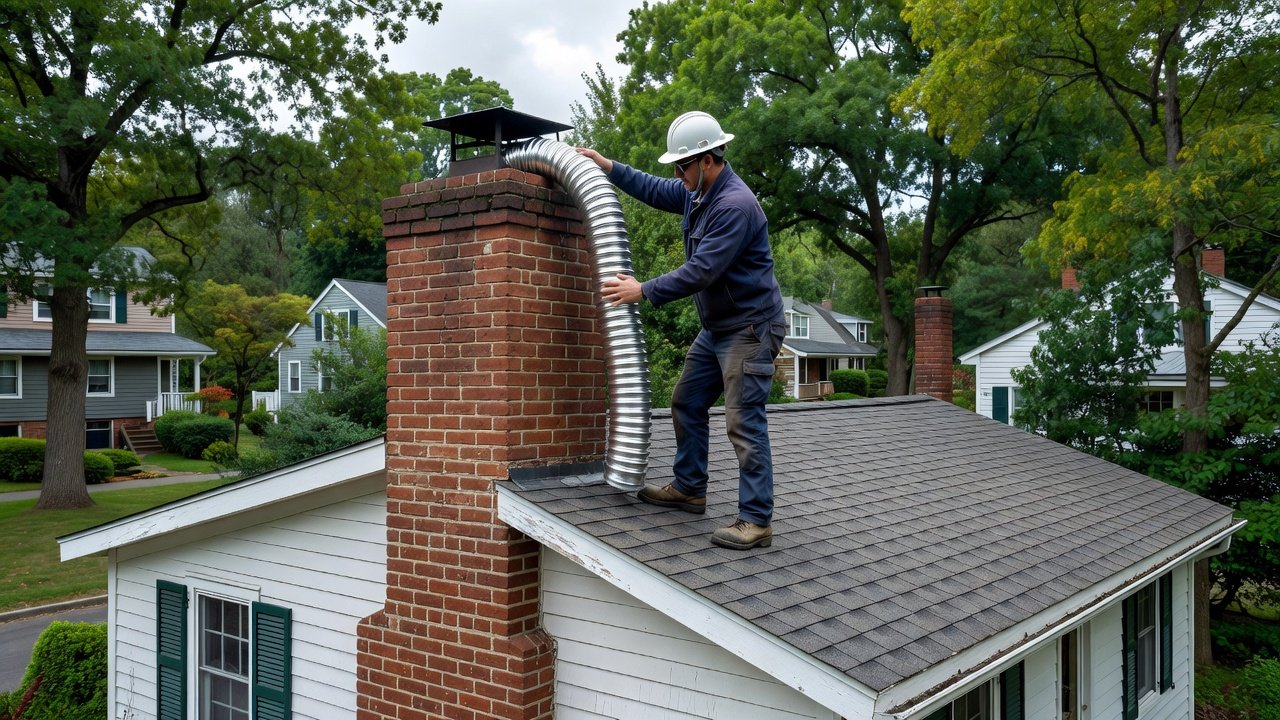
- Flexible Stainless-Steel Liner (304 or 316 alloy): The right choice for most Lawrence gas inserts, oil furnaces, and wood-burning fireplaces. A continuous flexible stainless tube is fed from the top of the chimney, connected to the appliance collar at the bottom, and insulated with a poured or wrapped ceramic blanket. 316-alloy liners are specifically rated for oil and high-condensing gas appliances where flue-gas acidity is a factor. We size the liner using the appliance manufacturer’s BTU output and the calculated flue-height-to-area ratio not guesswork.
- Rigid Stainless-Steel Liner: Used only where the flue runs perfectly straight rare in Lawrence’s pre-war housing stock, but we’ll confirm it during the inspection before recommending it.
- HeatShield® or Cast-in-Place Liner: When the existing clay tile is structurally sound but has hairline cracks or mortar-joint gaps, a poured resurfacer can restore a seamless inner surface without pulling the flue apart. This is also the best option for chimneys with irregular dimensions that make sleeve liners impractical.
Our Installation Process, Step by Step
We don’t schedule a liner job without an inspection first. Every installation at Lawrence Chimney follows this sequence:
- Camera inspection: We run a CCTV camera up the flue to document the current condition on video, not just our word. You see what we see.
- Sizing calculation: Using appliance specs, flue height, and any offsets or bends, we calculate the correct liner diameter. An undersized liner causes backdrafting; an oversized one creates condensation problems with modern high-efficiency appliances.
- Sweep and prep: The flue is swept and any loose debris removed before anything goes in.
- Liner installation: We work from the rooftop, feeding the liner down with a nose cone to protect the material, then connect and seal at the appliance collar below.
- Insulation: Ceramic insulation wrap or poured insulation is applied around flexible liners. This step maintains flue-gas temperature, improves draft, and is required for solid-fuel appliances under NFPA 211.
- Top plate and rain cap: A stainless top plate locks the liner at the crown; a rain cap keeps water and animals out.
- Draft test: Before we leave, we confirm the appliance drafts correctly with a smoke test or, where applicable, run the appliance through a startup cycle.
Everything Included in a Lawrence Chimney Liner Installation
- Pre-installation CCTV flue inspection and written condition report
- Liner sizing calculation documented for your records
- Appropriate-alloy flexible or rigid stainless liner (or HeatShield® resurfacer)
- Ceramic insulation wrap or poured insulation where required
- Stainless-steel top plate and rain cap
- Bottom connector and appliance collar seal
- Post-installation draft test
- Clean worksite we bag and remove all debris
- Written documentation suitable for your homeowner’s insurance file or a real-estate disclosure
Why Lawrence Homeowners Call Us for This Particular Job
Lawrence is a tight-knit Five Towns community, and our reputation here is built address by address. We’ve lined chimneys in the Cape Cods along Causeway and the larger colonials closer to Cedarhurst Avenue. We know that Nassau County Code Enforcement and your homeowner’s insurance carrier both want documentation not just a verbal assurance that the work was done to code. Every liner installation we complete leaves you with a written report you can hand to an adjuster or a real-estate attorney without hesitation.
We also know that rooftop access in Lawrence’s denser neighborhoods can mean tight lots and overhead utilities. We bring the right ladder equipment to work safely on steeper or taller rooflines and coordinate advance notice with neighbors when needed small things that matter on close streets.
Common Questions About Liner Installation in Lawrence
My house has a gas fireplace insert does it really need a liner if it already vents through the existing chimney?
Yes. Gas inserts produce cooler, wetter exhaust than wood fires. When that exhaust contacts old clay tile often oversized for a modern insert it condenses, saturates the mortar, and slowly destroys the flue from the inside. A properly sized flexible stainless liner (typically 4-inch or 5-inch diameter for most inserts) keeps flue gases hot enough to exhaust cleanly and protects the surrounding masonry. Nassau County code and most insert manufacturers require a listed liner as a condition of proper installation.
How long does a stainless-steel liner actually last in a coastal environment like Lawrence?
A 316-alloy liner the grade we specify for any appliance with acidic or high-moisture flue gases carries a manufacturer warranty of 15 to 25 years depending on the product line and routinely outlasts that in real-world use. The coastal salt air affects the exterior of your chimney far more than the sealed interior of a properly installed liner. Annual sweeping and inspection is still necessary; the liner itself is not a set-and-forget component, but it is genuinely long-lived when correctly installed and maintained.
Can liner installation be done at the same time as a chimney rebuild or crown repair?
Absolutely and in many cases, it makes the most sense to combine them. If we’re already accessing the rooftop for masonry work, adding a liner installation in the same visit avoids a second mobilization cost and ensures the new crown is built to accommodate the liner’s top plate correctly. We’ll walk you through the scope during the inspection so there are no surprises about what’s being done and in what order.
Schedule Your Chimney Liner Installation in Lawrence
If your liner is cracked, your flue is unlined, or you’re adding a new heating appliance and need the venting brought up to code, we’re straightforward to reach. Lawrence Chimney serves Lawrence and the surrounding Five Towns area with inspections, liner installations, and the documentation your insurer and municipality expect.
Call us or use the contact form on this page to schedule an inspection. We’ll assess your flue on camera, give you a clear recommendation in plain language, and get your chimney performing and venting the way it should.
Related from Lawrence Chimney: Chimney Sweep in Lawrence, NY · Chimney Inspection in Lawrence, NY · Chimney Repair in Lawrence, NY — Fix It Before Winter Finds the Crack