Chimney Cleaning Nassau County — Keep Your Home Safe Before the First Fire of the Season
Chimney cleaning in Nassau County means the thorough removal of creosote, soot, blockages, and debris from your flue, firebox, and smoke chamber the process that directly prevents the leading cause of home heating fires in Long Island’s older housing stock. If you burn wood, pellets, or even use a gas appliance, the National Fire Protection Association and most insurance carriers recommend a professional cleaning at least once a year. For homeowners in Lawrence and across Nassau County, that’s not a suggestion to bookmark and forget it’s the maintenance step that determines whether your fireplace is an asset or a liability this winter.
Lawrence Chimney has been doing this work in Nassau County for years, and we understand the specific conditions that affect chimneys here: the salt air off the Atlantic that accelerates liner deterioration, the older Cape Cods and colonials throughout the Five Towns with masonry chimneys that predate modern flue standards, and the tight chimney clearances common in Lawrence’s closely-built neighborhoods.
Why Nassau County Chimneys Need Attention Differently Than Upstate
It’s tempting to assume a chimney that “looks fine” is fine. In Nassau County, that assumption is riskier than in drier, inland climates. The proximity to Reynolds Channel and the Atlantic means humidity is consistently higher, which accelerates the oxidation of metal components and promotes the growth of mold and mildew inside the flue. Creosote the tar-like byproduct of incomplete combustion absorbs moisture and becomes a denser, harder glaze that’s more difficult to remove and more dangerous to leave in place. First-degree creosote brushes away easily; third-degree glazed creosote requires chemical treatment before mechanical cleaning can proceed safely.
We also see more nest blockages in this area than you might expect. Chimney swifts and European starlings favor the style of clay-tile-lined chimneys that dominate Nassau County’s mid-century construction. A blocked flue doesn’t just reduce draft it can push carbon monoxide back into the living space quietly, without any visible sign.
What a Professional Cleaning Actually Involves — Start to Finish
We know “cleaning” is a word that covers a lot of ground. Here’s exactly what happens when we arrive at your Lawrence home:
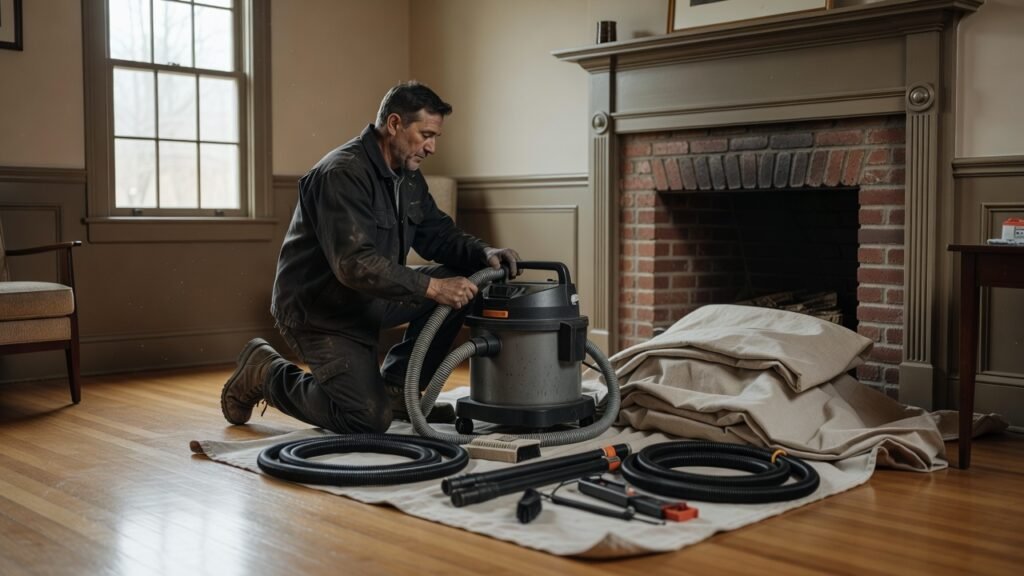
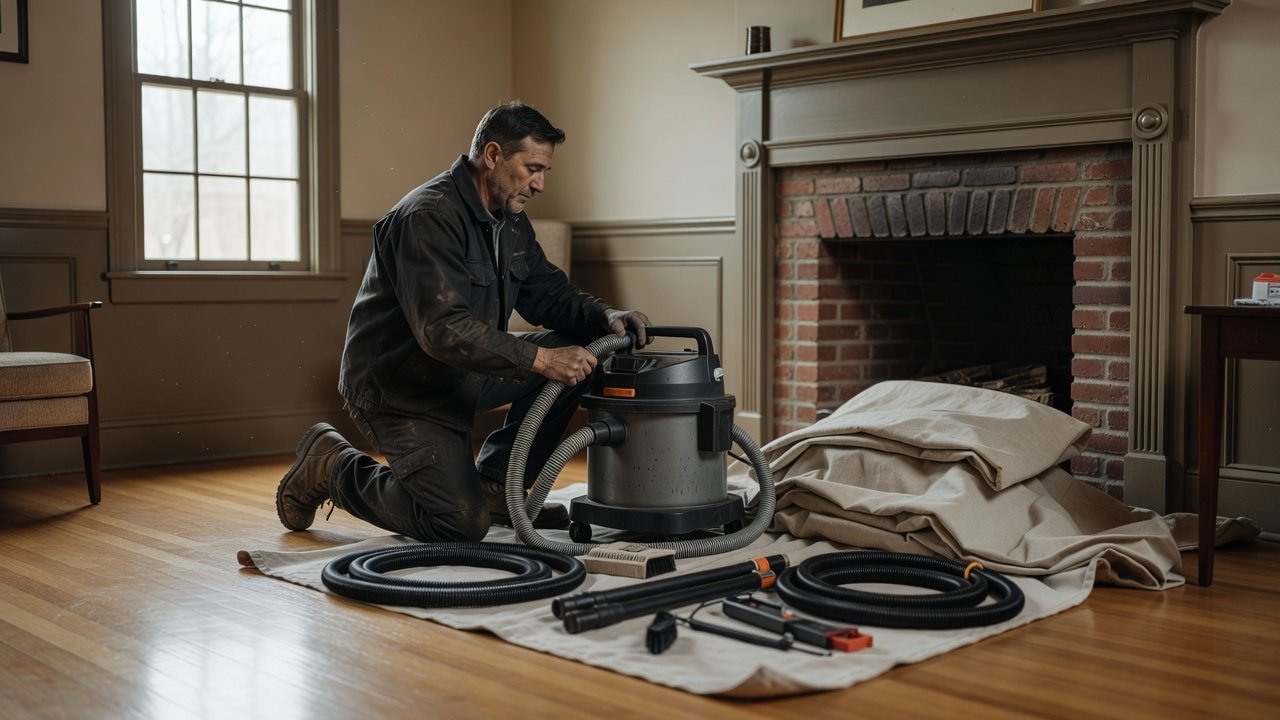
- Drop cloths and HEPA vacuum setup. We protect your hearth, flooring, and furniture before we open the firebox. Our equipment captures fine particulates so your living room doesn’t wear the evidence of our visit.
- Visual flue assessment from top and bottom. Before brushes go in, we assess what we’re dealing with creosote grade, visible liner damage, obstruction type so we choose the right tools and don’t force debris into a compromised liner.
- Rotary or hand-brush cleaning of the entire flue column. Depending on flue diameter, shape, and creosote stage, we use either traditional chimney brushes sized to your liner or rotary power systems for heavier buildup. We work from the top down, containing dislodged material at the firebox.
- Smoke chamber and smoke shelf cleaning. This area above the damper is often skipped in budget cleanings. It’s also where the heaviest creosote accumulates. We clean it thoroughly.
- Firebox brushing and debris removal. The combustion chamber is brushed, and all removed material is bagged and removed from your property.
- Level I inspection included. Every cleaning includes a Level I inspection per NFPA 211 standards a visual assessment of accessible portions of the chimney interior and exterior. If we see anything that warrants a Level II inspection (camera scan), we’ll tell you plainly and explain why.
- Written summary of findings. You receive a documented condition report, not just a verbal walk-away. This matters for insurance purposes and for any future sale of the home.
The Five Towns Salt-Air Factor: What It Does to Your Liner Over Time
Lawrence sits a few blocks from the water in some neighborhoods, and even homes further inland absorb significantly higher chloride exposure than properties in central or northern Nassau County. Salt-laden air is corrosive to stainless steel chimney liners, damper assemblies, and chase covers. During cleaning, our technicians specifically check for pitting, joint separation, and panel warping that coastal exposure accelerates. A liner with compromised joints isn’t just inefficient it allows superheated gases and embers to contact the surrounding framing. We note any coastal corrosion findings in your written report with photographic documentation.
Who in Nassau County Should Schedule a Cleaning This Year
The short answer: anyone with a fireplace, wood stove insert, pellet stove, or oil- or gas-fired appliance venting through a masonry or prefabricated chimney. More specifically, don’t wait if any of the following apply:
- You burned more than one cord of wood last heating season
- You notice a smoky smell in the house even when the fireplace isn’t in use
- It’s been more than 12 months since the last documented cleaning
- You recently purchased a home in Lawrence or surrounding Five Towns communities and don’t have inspection records from the prior owner
- You’ve seen evidence of birds or animals near the chimney cap, or you don’t have a cap installed
- Your damper has become stiff or difficult to open fully
New homebuyers in particular: Nassau County home sales rarely come with recent chimney documentation. A pre-use cleaning and Level I inspection is the only way to know what you actually have.
Frequently Asked Questions About Chimney Cleaning in Nassau County
How much creosote buildup is normal for a Nassau County home that burns wood three or four nights a week through winter?
At that usage rate roughly moderate burning through a Long Island winter most clay-tile-lined chimneys in Nassau County will accumulate light to moderate first-degree creosote over a single season. If the wood is well-seasoned (moisture content below 20%), you’re unlikely to develop glazed third-degree deposits in one year. However, if you’re burning green or partially seasoned wood, which is more common when purchasing firewood locally on short notice, buildup accelerates quickly and we may find second-degree deposits within a single season. Annual cleaning keeps that from compounding year over year.
Does the salt air near Lawrence actually matter for a chimney that looks structurally sound from the outside?
Yes, and this is a case where exterior appearances genuinely mislead. Chloride penetration causes internal corrosion on metal components damper blades, liner seams, and cap hardware before the damage is visible from the roofline or the firebox. We’ve found stainless steel liners with significant joint separation in homes where the chimney crown and exterior masonry looked completely intact. The only way to assess coastal corrosion accurately is a close inspection during cleaning, and for any concerns, a camera scan of the liner interior. Don’t assume “looks good from outside” means “good inside.”
Can I schedule a chimney cleaning in late fall if I’ve already used the fireplace a few times this season?
Absolutely and it’s better than skipping it. A few early-season fires don’t create enough buildup to require waiting. We clean chimneys in active use throughout November and December across Nassau County. The important thing is that the cleaning happens before heavy use accumulates; cleaning after three or four light fires is straightforward and gives you a clear flue for the rest of the season. If you call us in October or early November, you’ll also avoid the mid-December rush when scheduling fills up quickly across Long Island.
Schedule Your Chimney Cleaning in Nassau County Today
Lawrence Chimney serves Lawrence, the Five Towns, and surrounding Nassau County communities. We arrive on time, protect your home during the job, and leave you with a written condition report not just a clean flue and a handshake. Whether this is your annual maintenance or your first cleaning in a newly purchased home, we’re ready to help.
Call us directly or use our online form to request an appointment. Fall and early winter slots fill fast across Nassau County the earlier you book, the more flexibility we have to get you in before the cold weather arrives.
Lawrence Chimney — Chimney Cleaning Nassau County. Call us today to schedule your inspection and cleaning.
Related from Lawrence Chimney: Chimney Sweep in Lawrence, NY · Chimney Inspection in Lawrence, NY · Chimney Repair in Lawrence, NY — Fix It Before Winter Finds the Crack