
Published October 27, 2026
Chimney Sweep in Inwood NY: The Problems We Find and What Delaying a Sweep Actually Costs
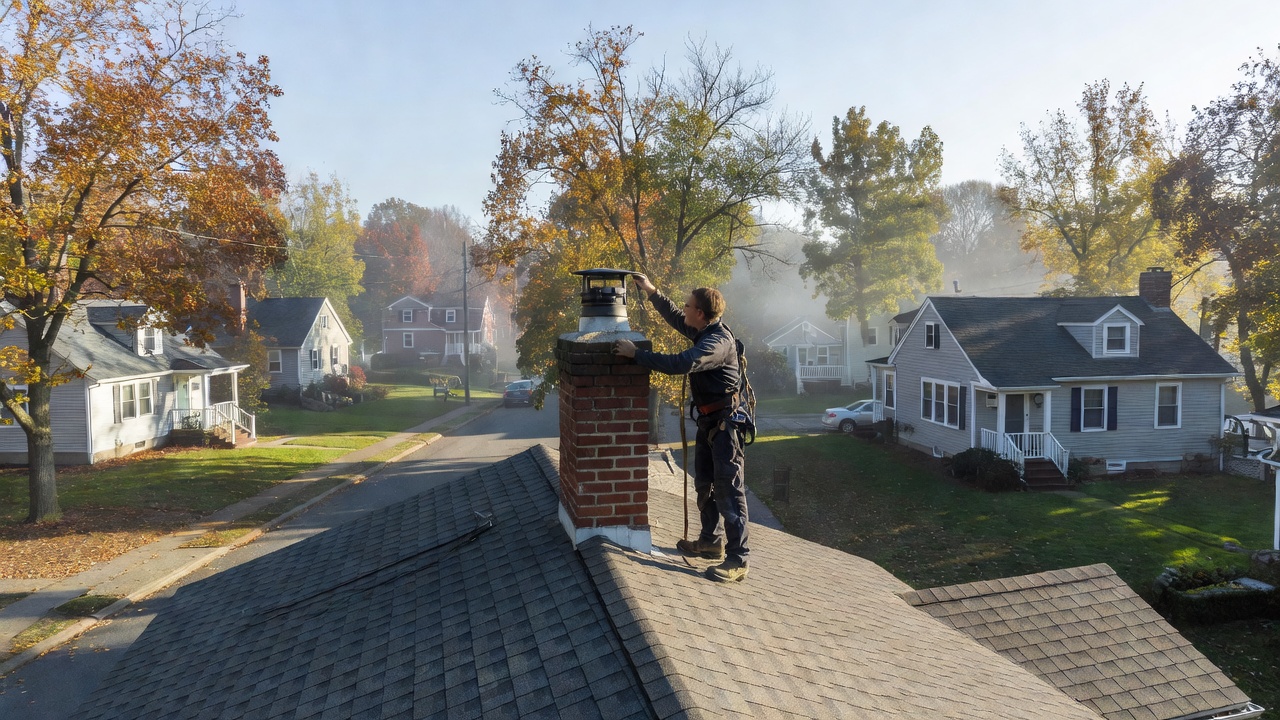
Most chimneys in Inwood don’t announce a problem loudly. They smoke a little more than usual. They smell faintly of something burnt on a warm afternoon in October. Then a homeowner lights the first real fire of the season in November and discovers that “a little more smoke” was actually a Stage 2 creosote buildup or a cracked flue tile that’s been open to the elements since last spring. A chimney sweep in Inwood NY, booked before peak heating season, catches those problems when they’re still straightforward repairs.
Below, we walk through the specific problems our technicians find most often in Inwood and the surrounding area, what each one looks like in practice, and why the calendar matters more than most homeowners expect.
Why Inwood Properties Are Harder on Chimneys Than Most
Inwood sits at the western edge of Long Island’s South Shore, bordered by Jamaica Bay and the Atlantic Ocean influence that drives everything here. Salt air is hard on masonry. Freeze-thaw cycling over a Nassau County winter opens hairline cracks in mortar joints faster than it does twenty miles inland. Homes in Inwood tend to be older Cape Cods and colonials, many with original brick chimneys that haven’t had a professional assessment in years. We also sweep chimneys regularly in Cedarhurst, Woodmere, and Long Beach, and the salt-air deterioration pattern we see in those towns mirrors what we find in Inwood almost exactly.
The Six Problems We Diagnose Most Often
1. Creosote Buildup Beyond Stage 1
Symptoms: A dark, oily or flaky residue visible just inside the firebox opening; a persistent burnt smell even when the fireplace isn’t in use; poor draw on cold-start fires.
Cause: Incomplete combustion from burning unseasoned wood, low-temperature fires, or a fireplace that’s used infrequently and then burned hard on weekends. Inwood homes that rely on a fireplace as a supplemental heat source during price spikes tend to burn longer, slower fires, which is exactly what accelerates creosote.
Fix: Stage 1 creosote brushes out during a standard sweep. Stage 2 requires heavier rotary tools. The Chimney Safety Institute of America notes that Stage 3 glazed creosote requires chemical treatment or, in severe cases, flue replacement. The diagnostic question we ask first is whether the deposit is dry and flaky, tar-like, or hardened and glossy. That changes the scope of work and the cost immediately.
Prevention: Burning only seasoned hardwood and scheduling a chimney sweep in Inwood NY every year keeps most chimneys at Stage 1, where a standard cleaning handles everything.
2. Spalling Mortar Joints
Symptoms: Small chunks of mortar or brick dust collecting on the roof or in the firebox; visible gaps between bricks when you look at the stack from the yard.
Cause: Salt air and repeated freeze-thaw cycles. Water enters a hairline crack, freezes, expands, and opens the joint a little wider each winter. We see this constantly in homes near the water in Inwood, Atlantic Beach, and Lido Beach.
Fix: Tuckpointing replaces deteriorated mortar before water reaches the brick itself. If individual bricks have already begun to face-spall, they need replacing. Catching this at the mortar stage is dramatically less expensive than replacing sections of the stack. Our chimney repair and repointing service covers both scenarios, and our technicians photograph every joint so you can see exactly what we’re looking at.
Prevention: Annual visual inspection plus a chimney waterproofing application extends mortar life considerably in coastal Nassau County.
3. A Damaged or Missing Chimney Cap
Symptoms: Animal noises or debris falling into the firebox; water sounds inside the flue during rain; rust staining on the damper or firebox floor.
Cause: Caps corrode faster in salt air, and many Inwood homes still have the original galvanized caps from decades ago. A missing cap means rain, birds, and squirrels have direct access to the flue.
Fix: Cap replacement. We size and fit a stainless steel or copper cap appropriate to the flue dimensions. If an animal has nested in the flue, we clear it before the sweep. If water has been entering for more than one season, we use our chimney camera inspection service to check for interior liner damage before assuming the flue is otherwise sound.
Prevention: A properly fitted cap does most of the protective work. It’s one of the lowest-cost, highest-return items on any chimney service call.
4. Deteriorated Flue Liner
Symptoms: Smoke entering the room even with the damper fully open; a masonry smell in rooms adjacent to the chimney; visible cracks when we run a camera down the flue.
Cause: Older clay tile liners develop hairline cracks from thermal cycling. In homes along the North Woodmere and Inwood corridors where the housing stock dates to the postwar years, original clay tile liners are now 60 to 70 years old.
Fix: Depending on the extent of cracking, options range from a parged resurfacing compound to a full stainless steel liner relining. We don’t recommend a fix until we’ve done a camera inspection, because the visual tells us exactly where and how severe the damage is. The NFPA 211 recommends that chimneys, fireplaces, and vents be inspected at least once per year, precisely because liner damage is invisible without a camera.
Prevention: Annual inspection catches early-stage cracking before it becomes a relining job.
5. A Stuck or Rusted Damper
Symptoms: Difficulty opening or closing the damper; drafts coming down the chimney when the fireplace isn’t in use; visible rust and warping when you look up into the firebox.
Cause: Humidity, salt air, and infrequent use rust the damper plate and the frame. Homes in Harbor Isle and Bay Park have the same problem, given how close they sit to tidal water.
Fix: Minor rust and stiffness often resolves with cleaning and lubrication. A warped or broken damper plate needs replacement. We also see homeowners switch to a top-mount damper at this point, which seals more tightly and adds weather protection at the crown.
Prevention: A top-mount damper combined with a good cap removes most of the moisture exposure that rusts a throat damper in the first place.
6. Chimney Crown Cracking
Symptoms: Visible cracks across the concrete or mortar crown at the top of the stack; water staining inside the firebox after rain.
Cause: A crown mixed too lean or poured too thin shrinks and cracks. Once cracked, every rain event drives water directly into the masonry below.
Fix: Small cracks take a flexible crown coat sealant. Wide or through-cracks require rebuilding the crown. We photograph the crown on every service call because it’s the first line of defense against water damage, and Inwood’s weather is not forgiving.
Prevention: A waterproofing treatment over an intact crown slows water absorption before cracking begins.
When to Book and What Waiting Costs
September and October are the right months to schedule a chimney sweep in Inwood NY. Our calendar fills quickly once temperatures drop and homeowners remember the fireplace exists. By mid-November, we’re often booking two to three weeks out, which means a homeowner who waits is either burning without a cleared flue or going without heat from the fireplace entirely.
The cost difference between a standard annual sweep and addressing deferred problems is real. According to Angi, a standard Level 1 chimney inspection averages $100 to $250 nationally, with sweeping running $150 to $350. Tuckpointing, liner repairs, and cap replacements each add to that base. A sweep found in September costs what a sweep costs. The same appointment in December, after a month of unswepped fires, may reveal Stage 2 creosote that takes additional time and cost to address. That’s not a scare tactic; it’s just what deferred maintenance produces.
We also work through Woodmere, Hewlett, and Cedarhurst on the same sweep routes, so if you have a neighbor who’s been putting off their chimney service, we’re often already nearby.
Talk to Our Team Before the Season Starts
If your Inwood home has a fireplace or wood stove you’re planning to use this winter, the right time to act is before the first cold week pushes everyone to the phone at once. Use our website contact form to request a free estimate. We’ll assess what your chimney actually needs rather than sell you services it doesn’t.
Frequently Asked Questions About Chimney Sweeps in Inwood NY
How often should I have my chimney swept in Inwood?
The NFPA 211 recommends at least one inspection per year, with cleaning as needed. For a fireplace used regularly through a Nassau County winter, once a year before heating season is the standard. If you’re burning three or more cords of wood per season, a mid-season check is worth considering.
What does a chimney sweep cost in Inwood NY?
A standard sweep and Level 1 inspection in the Inwood area typically runs in the range Angi reports nationally, which is $150 to $350 for the sweep and $100 to $250 for the inspection. Repairs such as tuckpointing, cap replacement, or liner work are priced separately based on what the inspection finds. We provide written estimates before any repair work begins.
Is salt air actually a problem for my chimney?
Yes, noticeably so. The corrosive effect of salt air on masonry mortar and metal chimney components is well-documented in coastal Long Island properties. Homes in Inwood, Atlantic Beach, and Island Park show faster mortar deterioration than properties further inland, which is one reason annual inspections carry more weight here than they might elsewhere.
What’s the difference between a Level 1 and Level 2 chimney inspection?
A Level 1 inspection covers accessible portions of the chimney and is appropriate for a fireplace under normal use with no recent changes. A Level 2 inspection includes a camera scan of the flue interior and is required when there’s been a change in fuel type, a chimney fire, or a real estate transaction. If we spot anything suspicious during a Level 1 visit, we’ll tell you what warrants a camera look before you commit to additional cost.
Can I use my fireplace before having it swept?
If the chimney hasn’t been inspected in over a year, we’d recommend against it until it’s been checked. A blocked flue, significant creosote buildup, or a cracked liner can each create carbon monoxide risk or a chimney fire. Those risks are present even when the fireplace “seems fine” from inside the room.
How long does a chimney sweep appointment take?
A standard sweep and Level 1 inspection on a single-flue system typically takes about 45 minutes to an hour. If we find something that needs closer examination or additional cleaning, we’ll walk you through it before extending the appointment.
Related from Lawrence Chimney: Chimney Sweep in Cedarhurst · Chimney Sweep Inwood