What Atlantic Beach Homeowners Should Know Before Booking a Chimney Sweep Atlantic Beach NY: 2026 Guide for Lawrence Residents
Salt air off Reynolds Channel does things to masonry that inland homeowners never have to think about. If your fireplace sat unused from March through October which is most of ours around Atlantic Beach, Lawrence, and Lido Beach the flue didn’t rest quietly. Moisture crept in, mortar joints softened, and whatever creosote was left from last season hardened another degree. By the time you want a fire in January, the chimney has already been working against you for months. Knowing what you can safely check yourself, and where a chimney sweep Atlantic Beach NY needs to take over, is the difference between a warm house and a dangerous one.
Before You Start: What You Actually Need
Before you climb on a ladder or shine a flashlight up the flue, gather a few things: a strong flashlight or headlamp, a small mirror (a dental mirror works well), a dust mask rated at least N95, old clothes you don’t mind ruining, and a drop cloth for the hearth. You should also have the name of a qualified chimney sweep Atlantic Beach NY service on hand because once you start looking, there is a real chance you’ll find something that needs professional attention before the fireplace is lit.
One practical note: do this inspection in daylight, with the damper fully open. You want natural light from above and your flashlight from below working at the same time. If natural light doesn’t reach a foot or two into the flue, visibility is already telling you something.
Step 1 — Clear the Firebox and Check What’s Already There
Remove all old ash, grate, and any accumulated debris from the firebox floor. Use a metal ash bucket, not a plastic bag — embers can survive 24 hours in ash. Once the firebox is clear, look at the brick and mortar inside. Cracks wider than a credit card, spalling brick faces, or white mineral staining (efflorescence) all mean moisture has been getting somewhere it shouldn’t. These are not cosmetic issues. Make a note of anything you see and photograph it.
This step is fully homeowner territory, but document carefully. What you find here shapes every conversation you’ll have with a sweep afterward.
Step 2 — Inspect the Damper by Hand
Reach up and operate the damper yourself. It should open and close smoothly with modest effort. A damper that sticks, won’t seat fully closed, or feels corroded is a problem worth fixing before the season starts. A leaky damper is one of the most common reasons Atlantic Beach and Island Park homeowners call us in October — cold air drafts down through a damper that no longer seals, and heating bills climb noticeably.
You can clean visible rust and debris from the damper plate with a stiff wire brush. But if the frame is warped or the hinge mechanism is broken, that’s a repair job, not a cleaning job. Don’t force a stuck damper; you can crack the throat.
Step 3 — Look Up the Flue with a Mirror and Flashlight
Position your mirror just inside the firebox opening, angled upward, and aim your flashlight at it. You’re looking for the flue liner — either clay tile sections, a metal liner, or bare masonry. What you want to see is a consistent surface without visible cracks, missing mortar between tile sections, or dark glazed patches that look almost lacquered.
That glazed look is third-degree creosote. The CSIA notes that creosote accumulates in three stages, with third-degree glazed creosote requiring professional chemical treatment or flue replacement. If you see anything resembling a shiny black coating, stop here. This is not a weekend project. Call a chimney sweep Atlantic Beach NY service before you use the fireplace.
If the flue looks generally clean and intact, move on.
Step 4 — Check the Roof Penetration and Cap (From the Ground First)
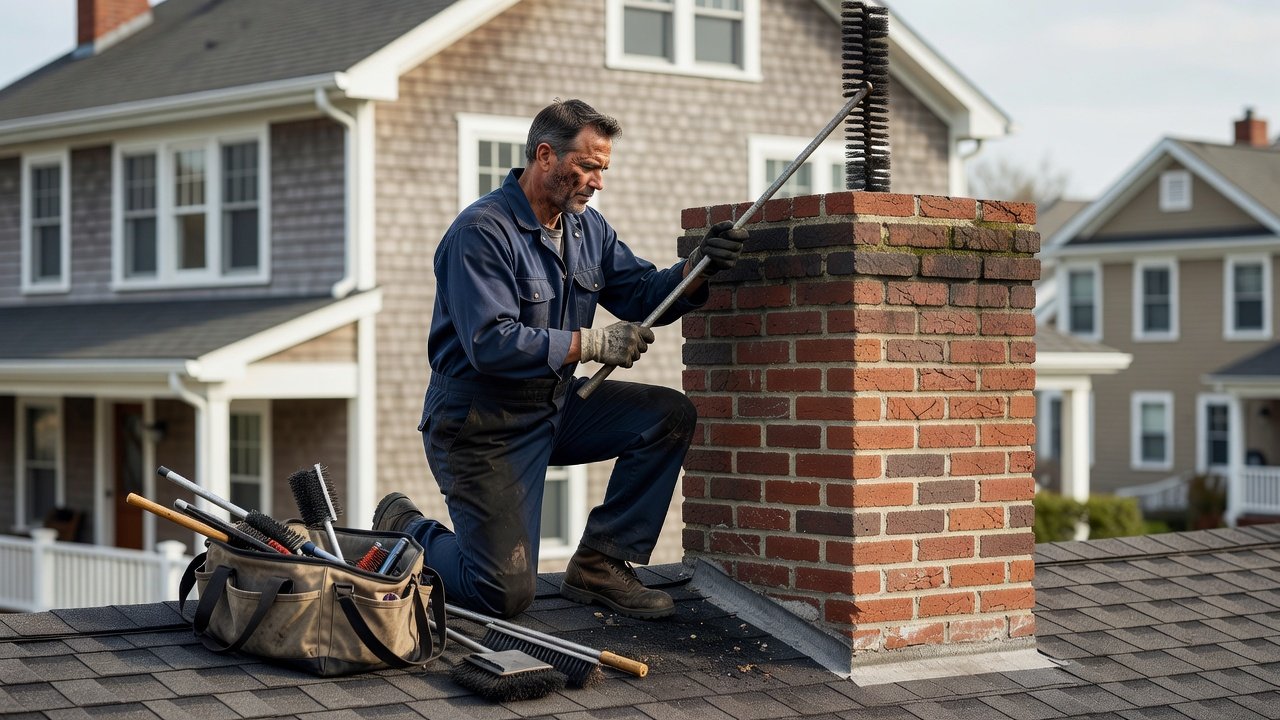
Before anyone climbs anything, look at the chimney from the yard with binoculars. You’re checking three things: the chimney cap, the flashing where the chimney meets the roof, and the overall condition of the crown (the concrete or mortar cap over the top of the chimney structure).
Missing or damaged caps are common along the South Shore. Wind off the Atlantic strips them, and freeze-thaw cycles through January and February crack the crowns. A cracked crown lets water into the flue system, and on a structure exposed to salt-laden coastal air, that damage compounds quickly. We see this regularly in Woodmere and Cedarhurst, and Atlantic Beach homes face the same exposure, often more so given how close they sit to the water.
If the cap looks intact and the flashing isn’t visibly lifting, you’re in reasonable shape for the exterior. If anything looks off from the ground, do not get on the roof yourself. Chimney roof work on a wet or frost-covered surface is one of the more reliable ways to get seriously hurt.
Step 5 — Assess Creosote Buildup Honestly
Using your flashlight and mirror from Step 3, look at the lower flue walls for buildup. Light grey or pale tan residue is first-degree creosote normal byproduct, brushes off easily during a standard sweep. Dark brown flaky deposits are second degree. Either way, annual cleaning handles both.
The National Fire Protection Association recommends that chimneys, fireplaces, and vents be inspected at least once per year and cleaned as needed, regardless of how often the fireplace is used. If you burned wood even four or five times last winter, cleaning is not optional it’s overdue.
You cannot safely clean a flue yourself without professional-grade brushes sized to your exact liner diameter, a proper vacuum system that contains fine particulate, and the ability to inspect what you’ve exposed. A shop vac and a hardware-store brush will spread debris and miss the areas that matter. Book the sweep.
Step 6 — Schedule a Level 1 Inspection While You’re at It
If steps 1 through 5 show nothing alarming, you still need a professional inspection this year. According to the Chimney Safety Institute of America, chimney fires account for approximately 25,000 house fires annually in the United States, causing over $125 million in property damage. Most of those fires involve chimneys that looked fine to the homeowner.
A Level 1 inspection covers all accessible portions of the exterior and interior of the chimney, the firebox, and the basic appliance installation. Our chimney inspection service includes this as standard. In 2026, expect to pay roughly $100–$250 for a Level 1 inspection across Nassau County similar pricing to what you’d see in Long Beach or Inwood. The sweep is often bundled or discounted when scheduled at the same time.
Step 7 — Know What You Found and Communicate It
When you contact a chimney sweep Atlantic Beach NY provider, have your notes and photos ready. Tell the technician exactly what you observed: any cracking, staining, damper behavior, and what you could or couldn’t see in the flue. This saves time and helps the sweep focus their camera inspection on the right areas. If the sweep doesn’t ask you any questions before starting, that’s worth noticing.
Our technicians ask because what a homeowner sees on the surface often points directly to a specific failure point deeper in the system especially in coastal homes where water intrusion follows predictable paths through aging masonry.
Troubleshooting Tip: The Fireplace Smells Like Smoke When You Haven’t Lit a Fire
This is one of the most common complaints we get from homeowners in North Woodmere and Atlantic Beach during the off-season. A cold, smoky smell drifting into the room when the fireplace is unused usually means one of two things: the damper isn’t sealing properly, or there’s negative air pressure pulling outside air — and odors — down through the flue. Both are diagnosable during a standard inspection. Neither goes away on its own, and neither is something you can fix with an air freshener or a chimney balloon alone if the underlying seal or draft issue isn’t addressed.
Ready to Get It Done Right?
We’ve worked on chimneys throughout Lawrence, Atlantic Beach, Hewlett, and the surrounding South Shore communities long enough to know what coastal winters do to these structures. If your inspection found anything concerning or if you’d simply rather hand the whole thing off to someone who does this every day we’d be glad to help. Reach out through our website contact form for a free estimate. We’ll take it from there.
Frequently Asked Questions: Chimney Sweep Atlantic Beach NY
How often does a chimney in Atlantic Beach need to be swept?
At minimum, once per year — and that recommendation holds even if you only burned a handful of fires the previous season. The NFPA 211 standard calls for annual inspection and cleaning as needed. For homes close to the water, like those along Atlantic Beach and Lido Beach, the moisture exposure alone justifies annual professional attention regardless of use frequency.
What does a chimney sweep in Atlantic Beach typically cost in 2026?
For a standard Level 1 inspection combined with a chimney sweep, Nassau County homeowners generally pay somewhere between $150 and $350 depending on flue height, liner type, and condition. If significant creosote removal or camera inspection work is added, the total will be higher. Get an itemized estimate before any work begins.
Can I sweep my own chimney to save money?
You can clean the accessible firebox yourself, but sweeping the actual flue safely requires properly sized brushes, containment equipment, and the ability to inspect what you’ve cleared. Without those, you’re likely to spread fine particulate through the house and miss the buildup in bends or damaged liner sections where it’s most hazardous. The savings aren’t worth it.
What’s the difference between a chimney sweep and a chimney inspection?
A sweep is the physical cleaning of the flue and firebox. An inspection assesses the structural condition of the entire system liner, crown, cap, flashing, smoke chamber, and firebox. The two are often done together, but an inspection without a sweep is a legitimate standalone service, especially if you want a baseline assessment before buying a home in areas like Hewlett Harbor or Woodsburgh.
Is salt air near Atlantic Beach actually hard on chimneys?
Yes, and noticeably so compared to inland properties. Salt accelerates the deterioration of mortar joints and brick faces, and the repeated freeze-thaw cycles through Long Island winters drive moisture deeper into already-weakened masonry. Chimneys within a mile of the water typically show wear faster than the same construction ten miles inland. Annual inspection isn’t just a formality for coastal homes — it’s genuinely protective maintenance.
What happens if I skip the chimney sweep for a season?
Creosote continues to build and harden. A second season without cleaning can push first-degree deposits into second or third degree, which costs significantly more to address and creates measurable fire risk. A chimney fire in a residential neighborhood — even a contained one — can damage the liner enough to require full replacement, a cost that dwarfs several years of routine sweeping fees.
Related from Lawrence Chimney: Smart Chimney Sweep Inwood NY · Smart Chimney Cap Installation Lawrence NY
Pingback: Honest Chimney Repointing Lawrence NY: 2026 Guide for Lido Beach Residents – Lawrence Chimney
Pingback: Confident Chimney Sweep Cedarhurst NY: 2026 Guide for Long Beach Residents – Lawrence Chimney