
Chimney Warning Signs That Fail a Home Inspection in Lawrence, NY
A failed chimney during a home inspection in Lawrence, NY can stall a sale, spike repair costs, or worse, put a family at risk going into winter. Most of the defects that inspectors flag were visible weeks or months earlier. Knowing what to look for before an inspector or a buyer does can save you real money and real trouble.
A Woodmere Homeowner Almost Lost Her Sale Over This
A homeowner in Woodmere listed her Colonial last spring. The buyer’s home inspector flagged the chimney during the walkthrough: spalling bricks at the crown, a missing flue cap, and heavy creosote visible from the roofline. The sale was delayed three weeks while estimates were gathered and repairs were scheduled. We got the call after the fact. Had she had our team out six months earlier, those issues would have been caught and corrected on her timeline, not the buyer’s.
That kind of scenario plays out regularly along the South Shore. Homes in Lawrence, Atlantic Beach, and Island Park sit close to the Ocean, and the salt air accelerates brick and mortar deterioration faster than it does further inland. Freeze-thaw cycles do the rest. The chimney problems that fail inspections here are not random. They follow patterns, and they show up in ways a homeowner can spot with their own eyes.
Warning Signs You Can See from the Ground
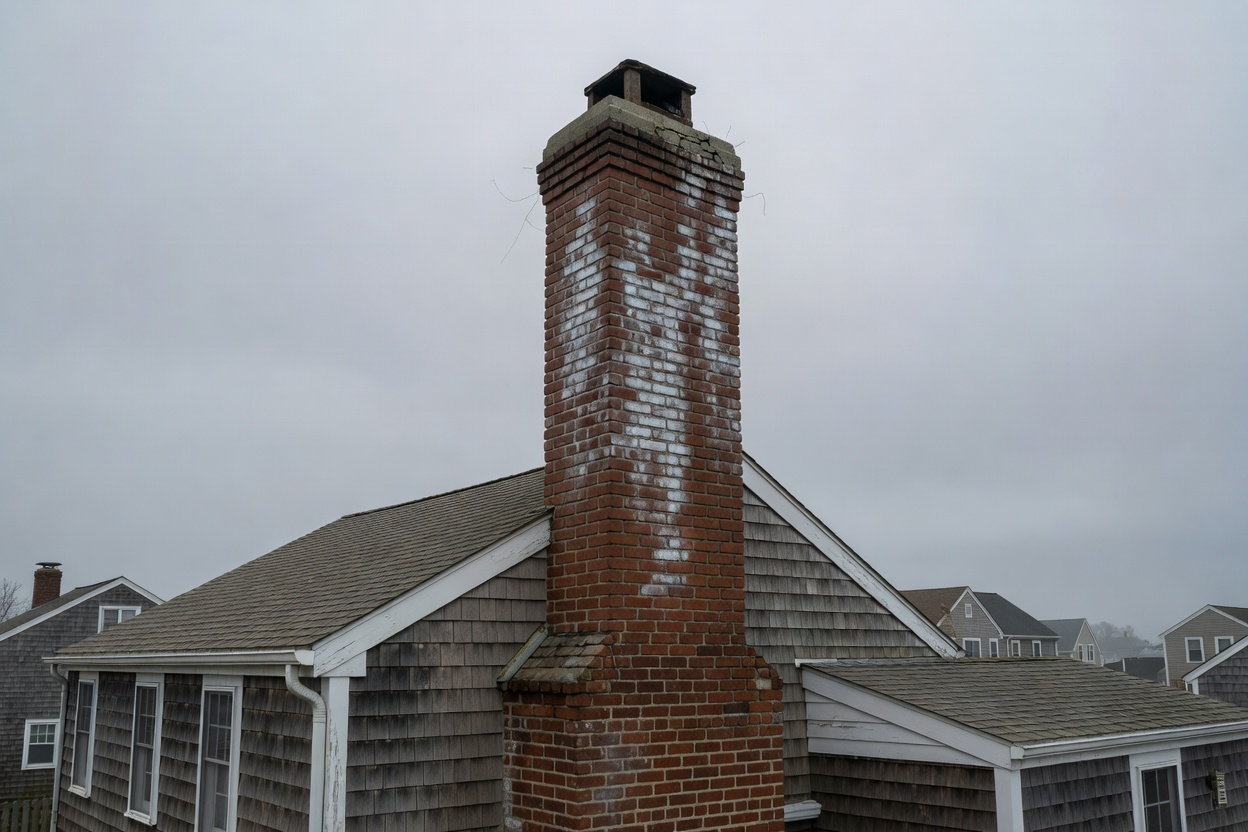
1. White staining on the brick face
That chalky white residue is called efflorescence. It means water is moving through the masonry and carrying mineral salts to the surface. It won’t go away on its own, and it usually means the mortar joints or the crown are already letting moisture in. A home inspector will note it. We will tell you whether it needs repointing, a new crown coat, or waterproofing treatment.
2. Bricks that are flaking or pitting
Spalling is what happens when water freezes inside the brick and the face pops off. On a Lawrence or Long Beach home that sits a half-mile from the water, this can progress from a few loose chips to structurally compromised sections in two or three winters. Once you see it on more than a small patch, the repair scope grows quickly.
3. Mortar joints that look recessed or crumbled
Run your finger along a mortar joint at a reachable section of your chimney base. If it crumbles or the joint is visibly recessed more than a quarter inch, you have a repointing job ahead of you. Inspectors probe these joints. Soft or missing mortar is one of the most commonly cited chimney defects in Nassau County home inspections.
4. A damaged or missing chimney cap
Look up at the top of your flue. There should be a metal cap sitting over the flue tile. No cap means rain, debris, and animals go straight into the flue. In a coastal community like Atlantic Beach or Lido Beach, an uncapped flue can take on significant water damage in a single season. This is a straightforward fix, but inspectors always flag it.
Warning Signs You Can See or Smell from Inside
5. A strong smoky or campfire smell when the fireplace is not in use
If the house smells like a firepit on a still or humid day, the damper may be failing or stuck open, or there is a draft reversal pulling air down the flue. It can also mean a heavy creosote buildup is off-gassing into the living space. The Chimney Safety Institute of America notes that creosote accumulates in three stages, with third-degree glazed creosote requiring professional chemical treatment or flue replacement. That smell is not cosmetic.
6. Black staining above the firebox opening
Some discoloration on the firebox surround is normal. Heavy black smoke staining that extends onto the wall above the mantel means smoke is not drafting properly up the flue. That points to a blockage, a damper problem, or a flue that is undersized for the firebox. A home inspector will open the damper and look up. What they find matters.
7. Visible rust on the damper or firebox
Open the damper and look at the plate with a flashlight. Surface rust is one thing. Heavy rust that makes the damper stiff or prevents it from closing fully is a problem. It usually means moisture has been getting in for a while, which means the flue liner above it may also be compromised.
Warning Signs That Require a Closer Look
8. White or gray streaks inside the firebox
Streaks running down the inside walls of the firebox can indicate a cracked or deteriorating flue liner. Water follows the crack down. The National Fire Protection Association recommends in NFPA 211 that chimneys be inspected at least once per year, and a camera inspection is the only way to see what is happening inside the liner. We offer our chimney inspection service with camera technology that shows exactly what a buyer’s inspector would find.
9. The chimney leans or the crown shows wide cracks
Stand back and look at the chimney from the street. A chimney stack that leans even slightly is a structural issue. Cracks in the concrete crown wider than a hairline will let water into the flue system every time it rains. In a neighborhood like Hewlett or North Woodmere, where older Colonials and Cape Cods are common, we see crown failures regularly on homes built before the 1980s.
10. You’ve never had a chimney sweep or inspection
This one isn’t something you see. It is something you know. According to the Chimney Safety Institute of America, chimney fires account for approximately 25,000 house fires annually in the United States, causing over $125 million in property damage. If you cannot remember the last time your chimney was swept or inspected, that fact alone is something a thorough home inspector will ask about, and it’s the fastest way to turn a routine walkthrough into a repair negotiation.
Call a Pro Now vs. Keep an Eye on It
Some of these signs need attention this week. Others give you a season to plan.
Call us now if you see spalling bricks, wide crown cracks, a missing cap, a leaning stack, smoke odor inside the home, or rust that prevents the damper from closing. These are active problems that will cost more to fix the longer they sit, and any of them will stop a home inspection in its tracks.
You can monitor and schedule soon if you see early efflorescence on sound brick, minor surface rust on a functional damper, or light smoke staining that matches years of normal use. Get these on a calendar before the next inspection or before you list, not after.
What Most Lawrence Homeowners Get Wrong
The most common mistake we see is treating the chimney as someone else’s problem until there is a buyer involved. By then, the leverage is gone. Repair costs that might have been $400 for repointing become a $1,200 negotiation item because a buyer’s inspector wrote it up in a report. A pre-listing chimney sweep and Level 1 inspection, which typically runs between $100 and $350 according to national averages reported by Angi, is one of the cheapest line items in a home sale.
The second mistake is assuming that because the fireplace “worked fine last winter,” the chimney is fine. A fireplace can function with a cracked liner, a failing crown, and heavy creosote, right up until it doesn’t. Coastal conditions in communities from Inwood to Point Lookout move these problems faster than homeowners expect.
Get Your Chimney Assessed Before Your Next Inspection
If you spotted anything on this list, or if you simply cannot remember when someone last looked at your chimney, we’d encourage you to reach out to our team before you schedule an inspector or list your home. We serve Lawrence and the surrounding South Shore communities and can tell you quickly what you’re dealing with and what it will cost to fix it. Use the contact form on our website to request a free estimate and we will follow up promptly.
Frequently Asked Questions About Home Inspections and Chimneys in Lawrence, NY
What chimney issues most commonly fail a home inspection in Lawrence, NY?
The most frequently cited defects are missing or damaged chimney caps, spalling or cracked brickwork, deteriorated mortar joints, cracked flue liners, and heavy creosote buildup. In coastal areas like Lawrence, water damage to the crown and masonry tends to be more advanced than in inland communities, so inspectors often find multiple related issues at once.
Do I need a chimney inspection before selling my home?
You are not legally required to have one, but it is strongly advisable. A buyer’s home inspector will examine the accessible portions of your chimney. If they flag problems, you will be negotiating repairs under time pressure. Having our chimney inspection service done in advance lets you address issues on your own schedule and at contractor rates rather than buyer-demand rates.
How much does a chimney inspection cost on Long Island?
A standard Level 1 inspection typically runs between $100 and $250, and a full sweep with inspection commonly falls in the $150 to $350 range, based on national averages reported by Angi for 2024 and 2025. Prices in Nassau County can trend at or above those figures depending on chimney height, access, and what the inspection reveals.
What is the difference between a Level 1 and Level 2 chimney inspection?
A Level 1 inspection covers all accessible portions of the chimney, including the firebox, damper, and visible exterior. A Level 2 inspection, which is required when a home changes ownership under NFPA 211 guidelines, includes a camera scan of the full flue to check the liner from the inside. If you are buying or selling a home in Lawrence, a Level 2 is what the standard calls for.
Can I skip the chimney inspection if we rarely use the fireplace?
Infrequent use does not protect the chimney from water intrusion, animal nesting, mortar deterioration, or liner cracks. The National Fire Protection Association recommends annual inspections regardless of how often the fireplace is used. A chimney that sits unused for years can actually accumulate blockages and moisture damage that a frequently used, regularly swept chimney avoids.
How long does chimney repair take before a home sale?
Basic repairs like cap replacement or minor repointing can often be completed in a single visit. More involved work such as crown rebuilding, waterproofing, or liner repair typically takes one to three days depending on scope. If you are listing your home and have identified chimney issues, contact us as early as possible so scheduling does not hold up your closing timeline.
Related from Lawrence Chimney: Chimney Sweep in Cedarhurst