
Clear Thinking on Chimney Inspection Woodmere NY: 2026 Guide for Bay Park Residents
Most homeowners are surprised to learn that a chimney inspection in Woodmere NY runs between $100 and $250 for a standard Level 1 visit less than a single cord of firewood. What surprises them more is finding out they’ve been skipping it for years because they assumed they could handle it themselves. We hear this constantly from Bay Park to Long Beach, and it’s worth clearing up honestly.
The DIY instinct is understandable. These are your homes, many of them sturdy post-war colonials and Capes that have stood along the South Shore since the 1950s. You’ve patched gutters, caulked windows, done your own landscaping. A chimney doesn’t look complicated from the outside. But the inside of a flue is a different world, and some of what homeowners think counts as maintenance genuinely doesn’t protect them or their families the way a proper chimney inspection does.
A Call from Bay Park That Stayed with Us
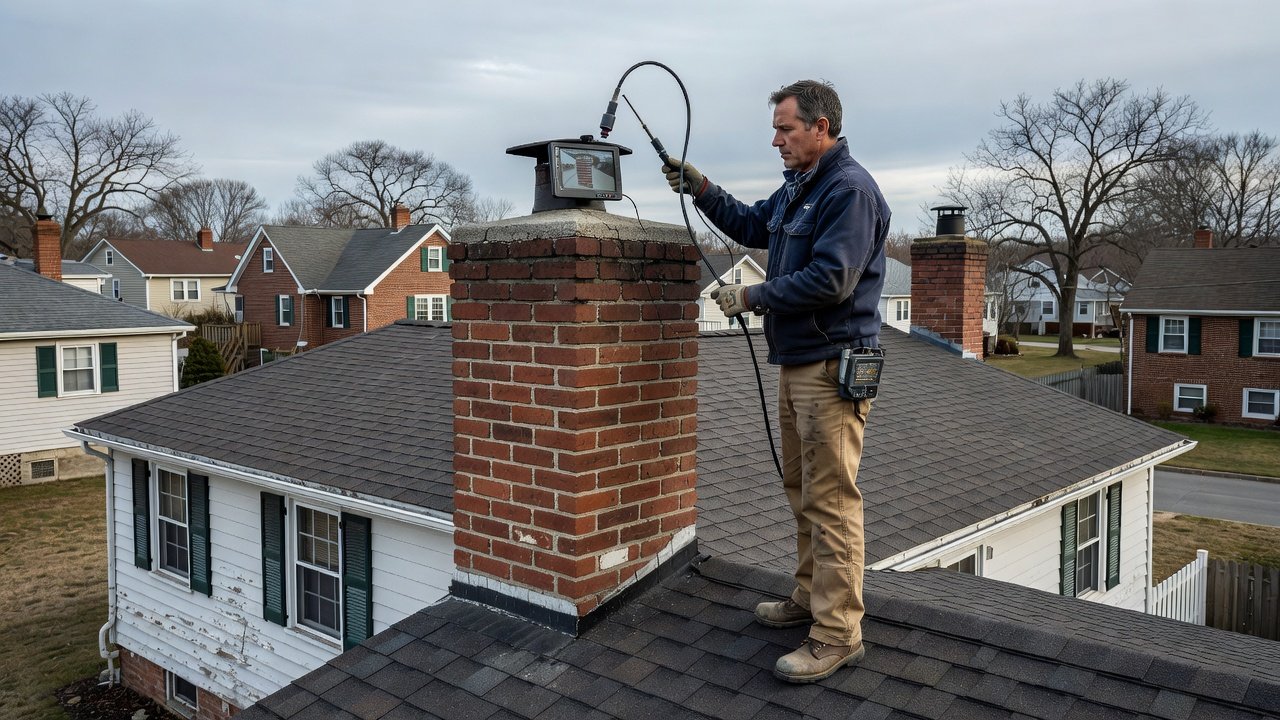
A homeowner in Bay Park called us in late February last year, a few weeks after he’d done what he described as a “thorough check” of his fireplace. He’d shone a flashlight up the flue from the firebox, burned a few test fires, and figured everything looked fine. By the time we arrived, we found a third-degree creosote deposit coating the upper flue liner the dense, glazed kind that doesn’t brush off and ignites at a lower temperature than most people realize. He’d had no idea it was there. The flashlight from below couldn’t reach it, and the fires he’d burned had actually been feeding it.
We cleaned it, documented it with a camera inspection, and he left that day with a chimney that was actually safe to use. But it was a close call, and it’s the kind of situation we see more often than we’d like not because homeowners are careless, but because the DIY limits on chimney work aren’t talked about clearly enough.
What You Can Actually See from Inside the House
Let’s start with the flashlight check, because almost everyone does it. Standing at the firebox and looking up with a light will show you the damper, maybe the first foot or two of the smoke chamber, and not much else. A residential flue in this area typically runs 15 to 25 feet from firebox to chimney cap. The creosote, the cracks in the liner, the spalled mortar joints nearly all of it sits in the sections you cannot see from below. This is why The National Fire Protection Association (NFPA 211) recommends that chimneys, fireplaces, and vents be inspected at least once per year by a qualified professional, regardless of how often the fireplace is used. That standard isn’t bureaucratic caution. It exists because the geometry of a flue makes self-inspection genuinely unreliable.
A professional chimney inspection uses a camera system lowered from the top or pushed through a cleanout sometimes so that every inch of the flue wall is documented. That’s not something you replicate with a hardware-store inspection mirror and a phone camera, no matter how much time you spend on it.
The “I Only Burn Seasoned Wood” Assumption
We hear this one often in Woodmere, Hewlett, and over in Inwood where people have been burning wood fires for decades. The thinking goes: if you use properly seasoned hardwood and burn hot fires, creosote won’t build up enough to matter. It’s a reasonable theory. It’s also incomplete.
Seasoned wood does reduce creosote formation compared to wet or green wood that part is true. But creosote still accumulates with every fire, and the rate depends on flue temperature, air supply, how long you burn, and the geometry of your particular chimney. According to the Chimney Safety Institute of America (CSIA), creosote accumulates in three stages, with third-degree glazed creosote requiring professional chemical treatment or flue replacement. Stage three doesn’t announce itself. You won’t smell it differently or see the flames behave differently. Only a camera inspection reveals it. The homeowner in Bay Park burned what he described as good hardwood every weekend for two seasons. That’s still how he ended up with a hazardous deposit.
Annual Sweeping Is Not the Same as an Inspection
Some homeowners, particularly those in older homes around Atlantic Beach and Island Park, do schedule annual sweeps and they should. But a sweep and an inspection are not interchangeable services, and treating them as the same thing is one of the more consequential misunderstandings we encounter. Sweeping removes combustion deposits from the accessible flue surfaces. An inspection evaluates the structural integrity of the liner, the mortar joints, the smoke chamber, the crown, the flashing, and the cap any one of which can become a fire or carbon monoxide pathway without showing any visible soot buildup at all.
A liner crack in a Woodmere home that’s been swept every year but never formally inspected can allow heat transfer to combustibles in the wall chase. That’s not a cleanliness problem. It’s a structural one, and sweeping doesn’t find it. Our chimney inspection service addresses both but it helps to understand why they’re distinct.
The “My Neighbor’s Chimney Looks Fine” Standard
Exterior chimney condition is something homeowners can and should monitor efflorescence on the brick, damaged mortar, a missing or cracked cap, rust staining. These are real warning signs, and noticing them is useful. But the logic that a chimney with clean-looking brick and a solid cap must be safe inside doesn’t hold up. The exterior weathers differently from the flue liner, and the salt-laden coastal air here on the South Shore is particularly hard on mortar joints and flashing. A chimney that looks presentable from the roofline can have liner deterioration that’s been developing for years.
We’ve done chimney repair and repointing work on homes from Lido Beach to North Woodmere where the crown and cap looked intact from the ground but the liner inside had significant damage. The exterior is worth watching. It’s just not a substitute for the interior evaluation.
One More Thing About Cleaning Your Own Flue
Chimney brushes are sold at hardware stores, and some homeowners in Long Beach or Woodmere attempt a basic sweep between professional visits. If you understand what you’re doing and take the proper precautions, light brushing of an accessible section isn’t dangerous. What it doesn’t do is replace the full-length cleaning a professional performs from the roof down, with proper containment to keep fine creosote dust and debris from coating your living space. More importantly, it creates a false sense of completion homeowners who’ve run a brush through the firebox area sometimes feel they’ve handled the chimney for the season. That’s the version of DIY chimney work that concerns us most, not because the brushing itself causes harm, but because it replaces the inspection that would actually catch a problem.
If you’re a Bay Park homeowner and your chimney hasn’t had a professional inspection in the past twelve months, we’d encourage you to get that scheduled before next heating season. Use the contact form on our website to request a free estimate we serve communities across Nassau County’s South Shore and we’re straightforward about what we find and what it costs.
Frequently Asked Questions About Chimney Inspection in Woodmere NY
What does a chimney inspection in Woodmere NY actually involve?
A standard Level 1 chimney inspection covers all accessible portions of the chimney interior and exterior the firebox, damper, smoke chamber, flue liner, crown, cap, and flashing. We use camera equipment to document the flue interior, which cannot be evaluated adequately by eye alone. The inspection tells you whether the system is structurally sound and free of hazardous deposits before you use it.
How much does a chimney inspection cost in the Woodmere and Bay Park area?
Based on 2024–2025 industry data, a Level 1 inspection typically runs between $100 and $250. A Level 2 inspection, which is required when you’ve had any change of use, a new homeowner purchase, or a suspected event like a chimney fire, generally costs more and includes more comprehensive camera documentation. We’re happy to give you a specific estimate through our website contact form.
Can I do a chimney inspection myself before calling a professional?
You can do a basic visual check of the firebox, damper, and visible exterior brick and those observations are worth sharing with us when we arrive. But the portions of the flue where problems most commonly develop are not visible from inside the house without professional camera equipment. A self-inspection doesn’t meet the NFPA 211 standard and won’t reveal liner cracks, upper-flue creosote, or structural issues in the smoke chamber.
How often should a chimney be inspected on the South Shore of Long Island?
NFPA 211 recommends annual inspections for all chimneys, fireplaces, and vents regardless of how frequently you use the fireplace. On the South Shore, where coastal air accelerates mortar and flashing deterioration, we think that recommendation is especially sound. Once a year, before heating season, is the right cadence for homes in Bay Park, Woodmere, Hewlett, and the surrounding communities.
What’s the difference between a chimney sweep and a chimney inspection?
Sweeping removes combustion deposits creosote, soot, debris from the accessible flue surfaces. An inspection evaluates the structural and safety condition of the entire chimney system. They address different things, and finding one on your service record doesn’t substitute for the other. Many of our clients in the area combine both services in a single visit, which is efficient and cost-effective.
Does homeowners’ insurance cover chimney problems found during an inspection?
Standard homeowners’ insurance policies typically cover sudden, accidental events a lightning strike, a windstorm, an unexpected chimney fire but they generally exclude damage from gradual deterioration or lack of maintenance. Having an annual inspection on record demonstrates that you’ve maintained the system, which can matter significantly if you ever need to file a claim related to the chimney.
Related from Lawrence Chimney: Chimney Sweep in Lawrence, NY · Smart Chimney Inspection Cedarhurst NY